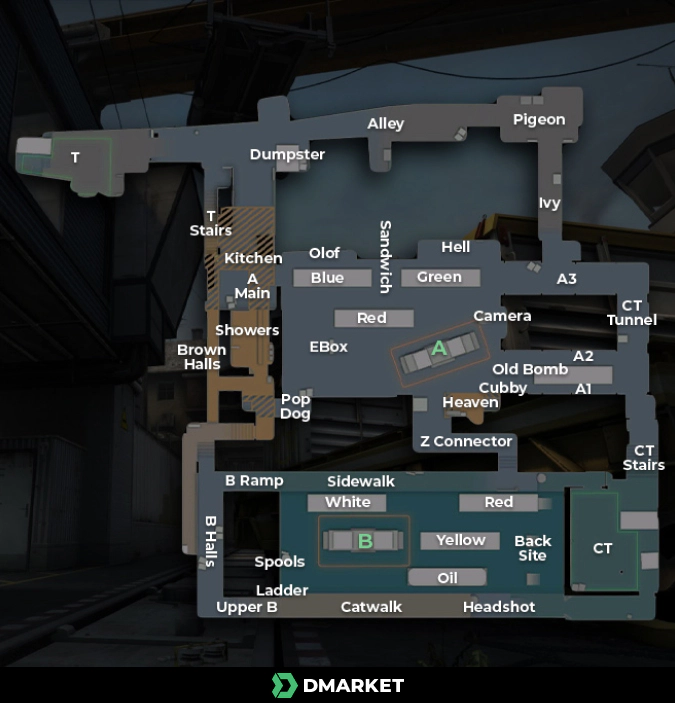
Mastering Callouts: A Guide to Effective Communication in CS2
Mastering Callouts in CS2 is essential for effective communication and teamwork. Callouts help players convey important information quickly, enabling teammates to strategize and react promptly. To master this skill, start by using specific terms to describe situations, such as 'Enemy on B site' or 'Watch mid for flanks.' Additionally, incorporating numbers to indicate player counts, like 'Two enemies in A house,' can further enhance clarity and precision in your callouts.
Another vital aspect of effective communication is to maintain a calm and steady tone, especially in high-pressure situations. Avoid unnecessary panic in your voice when calling out enemy positions or imminent threats. Instead, focus on delivering clear and concise information. Remember to also listen and adapt; if a teammate has a better or more refined callout, acknowledge it and incorporate that style into your communication strategy. Mastering these elements will significantly improve team coordination and overall gameplay in CS2.
Counter-Strike is a popular tactical first-person shooter game that emphasizes teamwork and strategy. Players compete in various game modes, often aiming to complete objectives or eliminate the opposing team. For those looking to enhance their experience, a comprehensive cases guide can provide valuable information on obtaining in-game items and cases.
Top 10 Callouts Every CS2 Player Should Know
As a dedicated CS2 player, mastering the essential callouts can give you a significant edge in gameplay. These callouts serve as a common language among teammates, helping you communicate enemy locations, strategies, and next moves effectively. Whether you’re playing on classic maps or new battlegrounds, knowing callouts like 'A Site', 'B Site', and 'Mid' can drastically improve your team's coordination. Here are the top 10 callouts that every CS2 player should familiarize themselves with:
- A Site: The main area where players plant the bomb on the A side of the map, crucial for attackers.
- B Site: Similar to A Site but located on the B side, essential for both attackers and defenders.
- Mid: The central area connecting A and B Sites; controlling this area is key to map dominance.
- Long: A long corridor leading to A Site, providing a direct approach for attackers.
- Short: A shorter route to A Site that is often less contested.
- Catwalk: A strategic high ground that offers excellent sightlines to A Site.
- Stairs: Located near the B entrance; crucial for defenders to hold their ground.
- Spawn: The starting area for each team; it's vital to know how to navigate quickly from here.
- Connector: The passageway that links Mid to A Site, often contested during early rounds.
- Ramp: The slope leading to B Site, providing a tactical approach for attackers.
How to Create Custom Callouts for Your CS2 Team
Creating custom callouts for your CS2 team can significantly enhance communication and strategy during gameplay. To start, establish a clear system for your callouts that includes specific locations, items, or enemy positions. Utilize a combination of numerical and verbal identifiers to create a structured method that everyone on the team can easily follow. For example, you can organize callouts by map sections or notable landmarks, ensuring that each member can quickly relay important information.
Once you have a basic framework in place, consider implementing visual aids to complement your custom callouts. This could include marking callouts directly on screenshots of the maps or using in-game markers where necessary. Additionally, holding a team meeting to practice these callouts can help familiarize everyone with their roles and responsibilities. Feedback from team members can also enhance the callout system, allowing it to evolve and improve as your team develops.